
GOVERNMENTS RUSH TO PLACATE PEOPLE BY ANNOUNCING INQUIRIES BUT DO THEY MAKE A DIFFERENCE?
In Ireland, the recent RTE documentary exposing horrific cruelty at the Shannonside horse abattoir sparked national outrage.
The full documentary that may be found here revealed not only abuse of horses but also food safety violations, threatening the integrity of Ireland’s entire food production industry.
The abattoir’s actions—fraudulent passports, false microchips, and violations of EU food safety laws—highlight a systemic problem in horse management and end-of-life care.
Sadly, there are many parrallels to what happens here in Australia.

THE INVESTIGATION PROMPTED AN ‘INQUIRY’
The RTÉ investigation in June 2024 brought these issues to light, prompting the Department of Agriculture to commission a “root and branch” review by Professor Paddy Wall—a veterinary, food safety, and traceability expert.
His January 2025 report responds directly to the failings reported in the documentary above, proposing sweeping reforms in traceability, welfare protocols, and regulatory oversight.
“Food production is one of Ireland’s key indigenous industries, and our reputation as a global leader is founded on stringent food safety standards and robust animal welfare practices. Any incidents that call the effectiveness of our controls into question risk undermining trust in international markets.” Professor Patrick Wall, Reforms to Strengthen Equine Identification, Traceability and Welfare, 26 Jan 2025, p. 3)
“An intolerable situation… stands in stark contrast to the values of horsemanship, and respect for animals, that we in Ireland like to think define us as a nation that prides itself on being the ‘land of the horse.’” (Professor Patrick Wall, Reforms to Strengthen Equine Identification, Traceability and Welfare, 26 Jan 2025, p. 2)
IRELAND’S HORSE DISPOSAL PROBLEM
Ireland is the largest per-capita breeder of thoroughbreds in the world and also has a large equestrian and sports horse industry.
Despite this, horse disposal options are severely limited.
Unlike Australia, where burial may be allowed under certain conditions, in Ireland even large studs such as Coolmore Stud must cremate horses, receiving only the head for burial.
For most horse owners, cremation is prohibitively expensive.
Many horse owners including racehorse owners reportedly hand horses to local hunts, leaving them to be fed to dogs.
The reality is that Irish horses often face a highly undignified end.
EUTHANASIA VERSUS SLAUGHTER
It is crucial to understand the difference:
Euthanasia – A humane, quick, dignified death for a suffering horse.
Common methods include:
Shooting
Captive bolt
Green Dream (though environmental concerns exist)
When carried out correctly, euthanasia ensures the horse is calm and unaware of its imminent death.
Slaughter – Inherently inhumane for horses.
Horses are highly aware of death and experience terror in slaughterhouses, as documented in The Final Race.
Many facilities are incompetent at stunning, leaving animals conscious while being killed.
Slaughter is not animal welfare—it is economic.
In Australia horses go to knackeries for pet food and until just recently many were slaughtered for human consumption.
Horses not currently being slaughtered in Australia for human consumption may be a temporary situation because horse slaughter in Australia to produce meat for human consumption is legal.
HORSE SLAUGHTER IS HUMANE?
Professor Paddy Wall’s suggestion that slaughter can be humane reflects a dangerous misunderstanding.
There is not a single horse slaughter facility in the world that has been independently recognized as truly humane.
Horses are flight animals — their heightened sensitivity, panic responses, and sheer size mean they do not move calmly into stunning boxes or “quietly” line up for death.
We ask you to be the judge: is there anything humane about what you see in the video above, the video here — or in The Final Race documentary?
Watch closely and decide for yourself whether “humane” is the right word.
This isn’t just about Ireland — it’s about the global horse slaughter industry.
There is no kind version of horse slaughter.
That’s why Meet Our Horse Meat exists: to document, expose, and ultimately end this trade.
THE ROLE OF TRACEABILITY
Horses in the EU have passports, and certain medications make them ineligible for human consumption.
Shannonside abattoir bypassed these rules with fraudulent microchips and passports.
Traceability must extend beyond racing and breeding careers.
In Australia, syndicate ownership often means low-value horses are sent to slaughter without the knowledge of individual owners.
Accountability is essential:
Who do you think should be responsible for a horse’s end-of-life decisions?
Should breeders be held accountable?
Join the conversation on Facebook here.
LESSONS FROM AUSTRALIA
Australia has faced its own horse meat scandals, including fraudulent horse meat sales.
And after ABC’s documentary, The Final Race aired, government officals were quick to order an inquiry – the Martin Report (2020), with recommendations for humane euthanasia programs and retraining of retired racehorses.
Overbreeding and lack of government or industry support undermine long-term solutions.
Key points from the Australian experience:
Humane euthanasia programs are possible for horses.
Retraining and rehoming programs help, but CANNOT absorb all retired racehorses.
Abattoirs and knackeries CANNOT provide humane solutions; fear and terror are inevitable for horses destined for slaughter.
Learn more here about the potential for food fraud within Australia and why – especially with rising food costs – this should concern you.
END OF LIFE RESPONSIBILITY
The equine industry must take full responsibility for the horses it breeds and races.
It is unacceptable to:
Breed horses for racing or sport and discard them once they are considered for ANY reason, ‘low-value’ or ‘wastage‘.
Government and industry should invest in humane, practical end-of-life solutions:
Experienced knackers providing euthanasia in familiar surroundings.
Mobile euthanasia services where possible.
Proper funding for retraining, rehoming, and responsible retirement programs.
INQUIRIES ARE NOT ENOUGH
While inquiries and reports, like the one commissioned after Shannonside, have some value, they are not enough.
Real change requires accountability, humane practices, and recognition that slaughter is not euthanasia.
Until the equine and racing industries in Ireland and Australia (and Canada) address overbreeding, end-of-life care, and traceability, horses will continue to face an undignified fate.
SUPPORT OUR WORK
At Meet Our Horse Meat, we place immense value on every donation we receive.
Your generosity fuels our investigations, keeps our reporting independent, and allows us to:
Expose cruelty and corruption in the horse slaughter industry.
Advocate for stronger laws and enforcement to protect horses.
Campaign for humane end-of-life solutions for all equines.
Educate the public about food fraud and animal welfare issues.
Push for transparency and accountability in racing and breeding.
Every contribution—no matter the size—helps us shine a light on what others want to keep hidden.
Together, we can end the exploitation and ensure every horse is treated with dignity.
#MOHM THREATENED?
We’ve been threatened by those in the horse racing industry and those who benefit from horse slaughter more times than we can count.
But we are not going away.
We are going to persist until horse slaughter no longer exists for any purpose within Australia -- and until the horse racing industry makes drastic changes.
We are going to continue our hands-on work to offer lifelong sanctuary to as many horses as possible. We generally have 20 at just one of our locations - at any given time.
We have the acreage to take on more horses as financial support allows.

BRUMBY SPECIFIC WEBSITE
#MOHM HAS A BRUMBY SPECIFIC WEBSITE TOOAs you know we are dedicated to banning the slaughter of horses in Australia for any purpose and that includes wild horses. Please join us on our "sister" website dedicated to banning the slaughter of wild horses AKA Brumbies for...
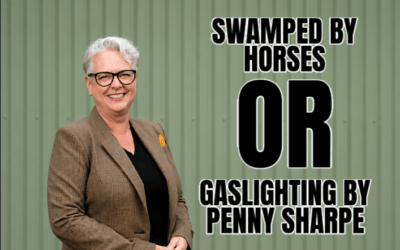
IS PENNY SHARPE GASLIGHTING?
SWAMPED BY HORSES OR IS PENNY SHARPE GASLIGHTING?Is Penny Sharpe MLC using aerial slaughter of horses as a political strategy? Our opinion piece argues that the NSW Government's aerial shooting of Brumbies has become far more than a wildlife management program. We...
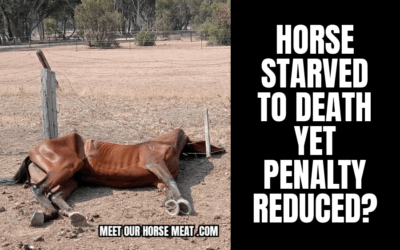
BRIAN CAREY STARVES HORSE TO DEATH
WHO IS THE RACING INDUSTRY KIDDING?We've asked that question before and we are asking it again. "Who is the racing industry kidding?"."Licensed stablehand and horse owner Brian Carey was initially disqualified for 16 months after Racing NSW found he had failed to...

Join us on social media and become a keyboard warrior.