

EVEN HORSE RACING FANS HORRIFIED AT CHOICE OF PICTURE
DOES THIS HORSE LOOK COMFORTABLE TO YOU?
Recently we were shocked to see the picture below published in a wide variety of publications in Australia INCLUDING but not limited to… NEWS.com.au | Herald Sun and on a racing industry website Punters.
THE FOLLOWING FROM HORSE RACING’S PUNTERS’ FACEBOOK ACCOUNT…
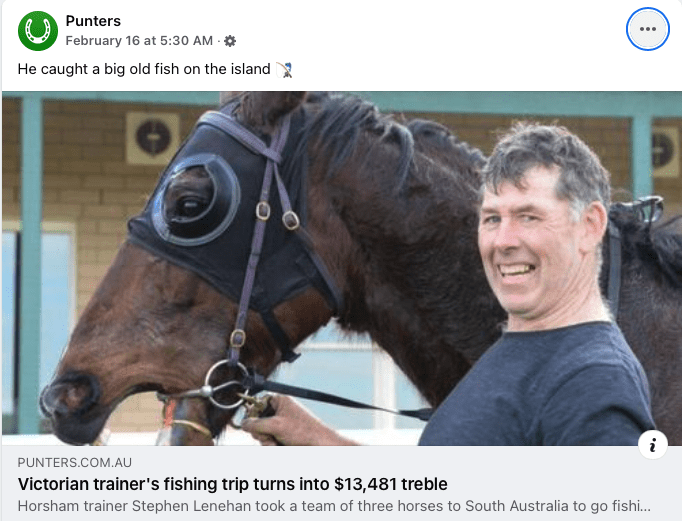
A SAMPLING OF COMMENTS FROM PUNTERS AKA HORSE RACING FANS
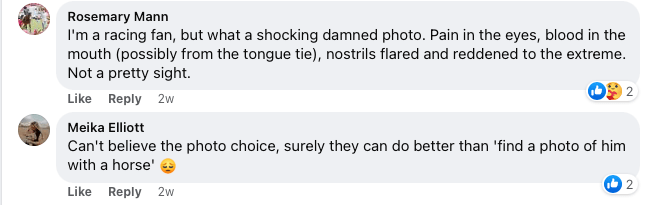
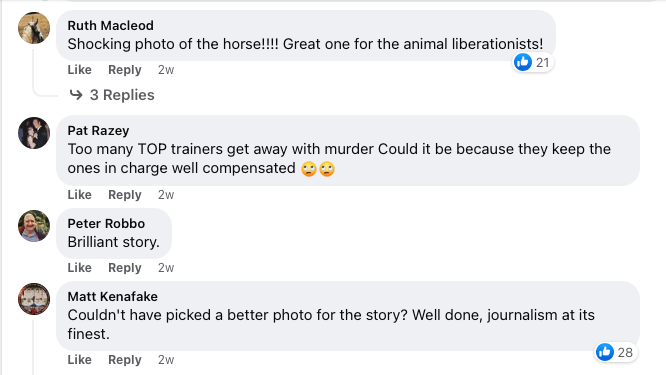
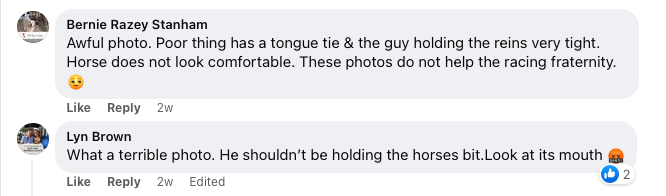

YOU CAN FIND WHAT WE’VE WRITTEN PREVIOUSLY ABOUT TONGUE TIES HERE…
“… HIS TONGUE BECOMING NECROTIC AND REQUIRING PARTIAL AMPUTATION.”
HORSE SLAUGHTER IS NOT NECESSARY
WHAT HAPPENS TO "UNWANTED" HORSES IF SLAUGHTER ENDS? CONTENT WARNING: The videos below include extremely graphic and disturbing footage of horse slaughter. They are confronting by design. Meet Our Horse Meat exists to show what the racing industry and its defenders...
TONGUE-TIE STUDY RESULTS
As reported by HORSETALK.co.nz a pilot study on the use of tongue ties in racing shows there can be complications from the use of tongue-ties.
That concerns about the effect of tongue-ties on equine welfare have led to their use being banned in equestrian disciplines under the umbrella of the International Equestrian Federation (FEI) since 2004 and, for racing in Germany since 2018.
More recently, Racing Australia banned the use of nylon stocking tongue-ties in Thoroughbred racing, although other materials are still allowed.
The Australian study reported on the results of a survey of 112 racehorse trainers exploring their reasons for the use of tongue-ties and nosebands.
The survey respondents comprised 72 Thoroughbred trainers and 40 Standardbred trainers.
About two-thirds were from Australia and 13.4% from New Zealand, with others from Sweden, Britain, the United States and a range of other countries.
Researchers in the University of Sydney study also investigated the reported effectiveness of tongue-ties and possible complications from their use.
The length of time the tongue-ties were used also influenced the risk of complications.
The likelihood increased with every minute of reported use, and nine minutes of use doubled the odds of the trainers reporting a complication.
Tightness was a risk factor for physical problems. Checking tongue-tie tightness by noting the tongue as not moving was associated with increased reporting of physical complications.
The Horse Talk coverage of the study continues…
Tightness was a risk factor for physical problems. Checking tongue-tie tightness by noting the tongue as not moving was associated with increased reporting of physical complications.
Discussing their findings, the researchers said the potential physical and psychological harm that tongue-ties can inflict on horses is of concern from a welfare perspective.
“Previous research has found tongue-ties have a significant negative effect on a horse’s physiological and behavioural state.
#MOHM THREATENED?
We’ve been threatened by those in the horse racing industry and those who benefit from horse slaughter more times than we can count.
But we are not going away.
We are going to persist until horse slaughter no longer exists for any purpose within Australia -- and until the horse racing industry makes drastic changes.
We are going to continue our hands-on work to offer lifelong sanctuary to as many horses as possible. We generally have 20 at just one of our locations - at any given time.
We have the acreage to take on more horses as financial support allows.

BRUMBY SPECIFIC WEBSITE
#MOHM HAS A BRUMBY SPECIFIC WEBSITE TOOAs you know we are dedicated to banning the slaughter of horses in Australia for any purpose and that includes wild horses. Please join us on our "sister" website dedicated to banning the slaughter of wild horses AKA Brumbies for...
PUSH BUTTON DONE-FOR-YOU EMAIL
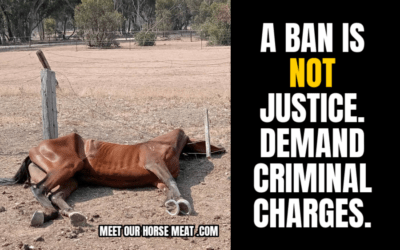
DEMAND CRIMINAL CHARGES - NOW!Horses died, the racing industry issued a ban. Is that justice? The death of City Limits shows us that the racing industry should NOT be regulating themselves.In January 2026, neighbours discovered the five-year-old thoroughbred City...

CURRENT PETITIONS
WE TAKE SOME PETITIONS SERIOUSLYAt Meet Our Horse Meat, we take 'some' petitions seriously—because we know not all petitions are created equal. That’s why we generally do not promote petitions that are privately hosted or lack government backing. Instead, we focus on...

Join us on social media and become a keyboard warrior.