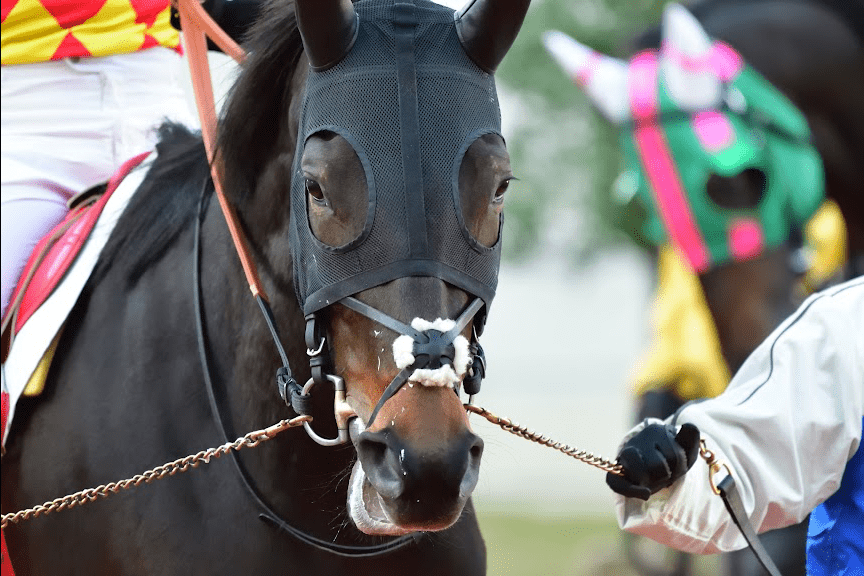
CHAMPAGNE. FASCINATORS. GLAMOUR.
That’s the image horse racing wants you to buy.
But behind the bubbles and the hats is the brutal truth:
Thousands of foals bred, most never make it to the track.
Horses injured, broken, and killed in front of cheering crowds.
“Retired” racehorses are referred to as “wastage” and quietly shipped to slaughter.
The horse racing industry knows the public is turning against them.
So they gender-wash the sport with glossy ads full of women in dresses, influencers posing on Instagram, and charity cheques to soften the cruelty.
Don’t be fooled. This isn’t glamour. It’s exploitation.
Boycott horse racing. Don’t bet. When you bet horses (and jockeys) die. Don’t attend. Don’t watch. Don’t promote cruelty.
Learn the truth: meetourhorsemeat.com/kick-up
Let’s strip away racing’s false glamour — and end its social licence for good.
RACING IS LOSING ITS SOCIAL LICENCE TO OPERATE
The term social licence to operate (SLO) might sound academic, but the reality is simple: it’s about whether the public is willing to accept what an industry is doing. Without social licence, even the most powerful industries eventually collapse under the weight of public rejection.
The mining industry was the first to learn this lesson.
It discovered that a government permit meant little if entire towns stood against them.
So mining companies got strategic — funding kids’ sports, donating to local events, and creating just enough division that opposition was drowned out.
It wasn’t generosity; it was manipulation.
Today, animal-use industries — including horse racing — are playing the same game.
WHEN THE PUBLIC SAYS ‘NO’
History shows what happens when an industry loses its social licence.
Circuses once dragged lions, tigers, and elephants from town to town in chains. Today, they’re all but gone. Not because they were illegal at first, but because the public turned away.
[Hint: Advocacy for causes YOU care about works.]
Fox hunting was celebrated as tradition in parts of Europe. But when the public refused to stomach the cruelty, laws followed in many locations, banning the practice of hunting an actual fox – instead in many cases foxes have been replaced by ‘drag’ hunting.
Once the public rejects an activity, legality won’t save it. Governments follow the voters.
Some industries adapt. Zoos, for example, realised that cages and shackled animals were unacceptable.
They reinvented themselves as conservation centres and educational hubs. It’s far from perfect, we at Meet Our Horse Meat are NOT fans of zoos – but some zoos at least tried to respond to changing values.
RACING IS DIGGING IN
Horse racing, on the other hand, is doing the opposite. It isn’t listening — it’s doubling down.
The industry knows the truth: every year thousands of foals are bred for racing, and only a fraction will ever make it to the track.
The rest are quietly discarded, many sent to slaughterhouses.
Investigations have blown this wide open:
In 2019, Australia’s ABC 7.30 program exposed the horrific mass slaughter of former racehorses at knackeries, shocking the nation and sparking protests.
PETA’s undercover footage in the United States revealed horses being whipped, drugged, and killed after catastrophic breakdowns — all while the public was told they were “athletes” loved like family.
In the UK, a spate of 59 deaths since 2000 at the Grand National has led to mounting public outrage and calls for bans.
The cruelty is no longer hidden. It’s on our screens.
And once people see it, they can’t unsee it.
So how does the horse racing industry respond?
Not by fixing the problem — but by hiding it.
Racing bodies flood social media with glamour shots of champagne, fascinators, and celebrity ambassadors.
They plaster their name across charity fundraisers, hoping to buy legitimacy by association.
They hire PR firms to gender-wash the sport, insisting it’s “inclusive” and “fun” for women.
THE GENDER-WASHING PROBLEM
Let’s be clear: the racing industry does not care about empowering women. What it cares about is image.
Ad campaigns are filled with young women in designer dresses, smiling trackside with a glass of bubbly in hand.
Female jockeys are paraded as proof of “diversity.”
But anyone who actually sets foot at a country track knows the truth — the crowds are overwhelmingly men, and the glamour shots are pure marketing fantasy.
And while there are brilliant female jockeys, most earn far less than their male counterparts.
They are often pushed into racing because their lighter frames make it easier to “make weight.”
That isn’t progress — it’s exploitation dressed up as equality.
TARGETING WOMEN ON SOCIAL MEDIA
Racing’s latest trick is to aggressively target young women on social media.
On Instagram and TikTok, “race day fashion” competitions are marketed as the main event.
Influencers are paid to pose in hats, heels, and pastel dresses, tagging #RacedayReady or #ChampagneAndFascinators to make gambling and horse abuse look chic.
Videos rarely show the track — they show the outfits.
It’s a calculated strategy: if racing can recruit a new generation of women as spectators, it can distract from the deaths, injuries, and slaughter behind the scenes.
It’s not about fashion, it’s about survival.
The industry is desperately trying to buy back a social licence it is rapidly losing.
But more and more women see through this manipulation. They don’t want cruelty packaged as couture. They don’t want bloodsport disguised as a lifestyle brand.
LEGAL ISN’T THE SAME AS LEGITIMATE
Racing defenders love to point to legality: “We’re regulated. We follow the rules.”
But legality is not legitimacy. A social licence is granted by the public, not the government.
Once it’s gone, laws catch up. That’s why cirucus acts made changes and fox hunting ended — first, people walked away, then governments acted.
Horse racing is now teetering at that edge. Every new welfare scandal chips away at what little social licence it has left.
THE END OF THE TRACK?
The public is watching horses die on live TV.
They’re seeing exposés of slaughterhouses full of “retired” racehorses.
They’re questioning why gambling profits are prioritised over animal lives.
And here’s the truth: no amount of champagne, charity cheques, influencers, or glossy photoshoots will cover that up.
The social licence for horse racing is already cracking.
And once it breaks, racing will go the same way as circuses and hunts — a cruel relic, remembered not for its glamour, but for the suffering it caused.
WHAT YOU CAN DO…
The horse racing industry wants you to believe the cruelty is glamorous. Don’t buy it.
Learn more about what really happens to racehorses: meetourhorsemeat.com/kick-up
Boycott racing — don’t bet, don’t attend, and don’t promote an industry built on animal suffering.
Together, we can kick horse racing’s flimsy social licence to the curb — and consign it to history where it belongs.
SUPPORT OUR WORK
At Meet Our Horse Meat, we place immense value on every donation we receive.
Your generosity fuels our investigations, keeps our reporting independent, and allows us to:
Expose cruelty and corruption in the horse slaughter industry.
Advocate for stronger laws and enforcement to protect horses.
Campaign for humane end-of-life solutions for all equines.
Educate the public about food fraud and animal welfare issues.
Push for transparency and accountability in racing and breeding.
Every contribution—no matter the size—helps us shine a light on what others want to keep hidden.
Together, we can end the exploitation and ensure every horse is treated with dignity.
#MOHM THREATENED?
We’ve been threatened by those in the horse racing industry and those who benefit from horse slaughter more times than we can count.
But we are not going away.
We are going to persist until horse slaughter no longer exists for any purpose within Australia -- and until the horse racing industry makes drastic changes.
We are going to continue our hands-on work to offer lifelong sanctuary to as many horses as possible. We generally have 20 at just one of our locations - at any given time.
We have the acreage to take on more horses as financial support allows.

BRUMBY SPECIFIC WEBSITE
#MOHM HAS A BRUMBY SPECIFIC WEBSITE TOOAs you know we are dedicated to banning the slaughter of horses in Australia for any purpose and that includes wild horses. Please join us on our "sister" website dedicated to banning the slaughter of wild horses AKA Brumbies for...
PUSH BUTTON DONE-FOR-YOU EMAIL
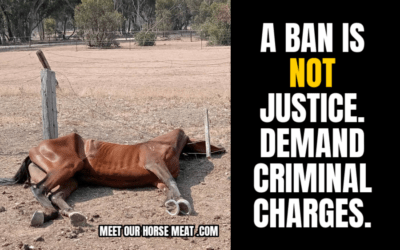
DEMAND CRIMINAL CHARGES - NOW!Horses died, the racing industry issued a ban. Is that justice? The death of City Limits shows us that the racing industry should NOT be regulating themselves.In January 2026, neighbours discovered the five-year-old thoroughbred City...

CURRENT PETITIONS
WE TAKE SOME PETITIONS SERIOUSLYAt Meet Our Horse Meat, we take 'some' petitions seriously—because we know not all petitions are created equal. That’s why we generally do not promote petitions that are privately hosted or lack government backing. Instead, we focus on...

Join us on social media and become a keyboard warrior.