

WHAT SCIENCE & EVERY OTHER HORSE SPORT TELLS US…
The racing industry insists that starting horses young — and racing them at two years old — is not only harmless, but beneficial.
According to this narrative, early racing “strengthens bones,” prepares horses for long careers, and reflects what horses are “naturally built” to do.
It sounds reassuring.
It’s also deeply misleading.
The reality — supported by veterinary science (YOU can read the studies below) and by how every other equine sport treats young horses — is far more uncomfortable for racing.
This isn’t about whether a two-year-old can run. Of course they can.
The real question is what it costs them to do so — and how many never recover from that cost.
GROWTH PLATES: WHAT RACING TELLS YOU – & WHAT IT LEAVES OUT
THIS IS A PARTIAL TRUTH USED TO SELL A FALSE CONCLUSION
Research has shown that many lower limb growth plates (such as those in the cannon bone and pastern) may in some cases close by approximately 2.5 to 3 years of age in some Thoroughbreds.
Some studies place closure of the distal radius — a frequently cited example — at roughly 30 months, with variation between individuals.
But this is where the industry conveniently stops talking.
More detailed anatomical research demonstrates that key parts of the horse’s skeleton mature much later, particularly those most affected by racing:
– The spine (thoracic and lumbar vertebrae) continues maturing well beyond the age racing begins
– Studies examining vertebral growth plates in Thoroughbreds show closure occurring closer to 5–6 years of age, sometimes later
– The pelvis and supporting structures critical to balance, stride efficiency, and shock absorption mature on a similar timeline
Racing stresses the entire horse, not just the lower legs.
Pretending early limb maturity equals full skeletal readiness is scientifically dishonest.
BONE ADAPTS TO EXERCISE IS NOT A LICENCE TO RACE BABIES
Another common industry defence is that bone responds positively to loading, and that early exercise can strengthen the skeleton.
This point is often technically correct — and strategically abused.
Research does show that controlled, progressive loading can stimulate bone adaptation.
However, the same body of literature makes it equally clear that:
– Excessive high-speed loading increases injury risk
– Poorly managed workloads overwhelm tissue adaptation
– Tendons, ligaments, joints, and cartilage adapt more slowly than bone, making them vulnerable in young horses
Crucially, these studies do not conclude that early racing is beneficial.
They examine conditioning under controlled circumstances — not the commercial reality of racing, where young horses are pushed to peak performance quickly to justify their cost.
Bone can adapt BUT…
SO CAN IT FRACTURE!
IF EARY RACING WERE ‘NATURAL’ – OTHER HORSE SPORTS WOULD DO IT TOO – THEY DON’T
Here’s the comparison racing avoids entirely.
Outside of racing, early high-intensity competition is considered irresponsible.
Across equestrian disciplines where soundness and longevity matter:
Dressage: Horses are lightly backed around 3–4 years, but serious collection and competition are delayed until 6–8+ years, when the spine and core musculature are mature
Show jumping: Progressive training is the norm, with higher fences and elite competition reserved for 5–7+ year-old horses
Eventing: Upper-level competition is typically restricted to fully mature horses, often 7–9 years old
Endurance: Many governing bodies impose minimum age limits (often 6 years or older) before horses can compete over long distances, explicitly to protect immature skeletons
These disciplines are guided by veterinary research, decades of injury data, and lived experience. They know what happens when immature horses are pushed too hard, too soon.
If intense athletic competition at two years old were truly beneficial, racing would not be the global outlier.
But it is.
DEFENDING RACING IS NOT BASED ON WELFARE SCIENCE
Racing often cites studies showing that horses who begin training or racing earlier sometimes have longer or more successful racing careers.
What those statistics fail to capture is who never makes it into the dataset.
– Horses who break down early
– Horses who are quietly retired due to chronic injury
– Horses who are discarded, sold, or disappear into slaughter pipelines
These horses don’t become “statistics.” They become invisible losses.
A system that celebrates the few who survive early stress while normalising the destruction of the many is not evidence-based. It’s exploitative.
LONGEVITY VERSUS PROFITABILITY
THE REAL REASON HORSES ARE RACED SO YOUNG
Other disciplines can afford to wait.
Racing cannot — because its economic model depends on early returns:
– Early racing fuels betting markets
– Early performance drives breeding value
– Early breakdown is written off as “wastage”
This is not a biological necessity.
It’s a commercial choice.
And it comes with consequences: high injury rates, shortened careers, and thousands of horses deemed expendable once they stop turning a profit.
THE TRUTH RACING DOESN’T WANT TO SAY OUT LOUD
Every other equine sport waits for maturity because waiting works.
Racing doesn’t wait because waiting costs money.
And that difference explains everything — from early breakdowns to the relentless pipeline of horses who vanish from the track and reappear at knackeries and abattoirs.
Racing young horses isn’t about what’s good for horses.
It’s about how fast they can be used — and how cheaply they can be replaced.
Horses are the ones whose welfare is repeatedly sacrificed in silence while the spotlight shines elsewhere.
STUDIES AND ARTICLES CITED…
Gabel AA (1977) — Correlation of closure of the distal radial physis with performance and injury in the Standardbred
(Distal radial growth plate closure average ~29.8 months; range 26–35 months.)
Vulcano LC et al. (1997) — Radiographic study of distal radial physeal closure in Thoroughbred horses
(Monthly radiographic assessment; sex-based variation in closure timing.)
Haussler KK et al. (1997) — Developmental variation in lumbosacropelvic anatomy of Thoroughbred racehorses
(Vertebral and pelvic growth plate closure reported between ~4.9–6.7 years.)
Haussler KK et al. (1997) — AJVR full-text PDF: Developmental variation in lumbosacropelvic anatomy
(Peer-reviewed full paper detailing delayed spinal maturity.)
Haussler KK (1999) — Anatomy of the thoracolumbar vertebral region of the horse
(Thoracolumbar vertebral physeal closure extending into mid-to-late maturity.)
Wong ASM et al. (2023) — Association between training workload and catastrophic musculoskeletal injury in Thoroughbred racehorses
(High-speed exercise exposure linked with catastrophic injury risk.)
Verheyen K et al. (2006) — Exercise distance and speed as risk factors for fracture in racehorses
(Demonstrates workload-speed interaction effects on fracture risk.)
Crawford KL et al. (2020) — Combined training and racing high-speed exercise and fatal musculoskeletal injury risk
(Cumulative high-speed exercise linked to fatal injury outcomes.)
Queensland Racing Integrity Commission (2023–24) — Equine Lifecycle & On-Track Injury Report
(Official Australian racing authority data on injuries and fatalities.)
The Guardian (2025) — Australian racehorse deaths linked to racing and training injuries
(Independent investigative reporting on racehorse fatalities.)
The horse racing industry can spin it.
They can shine it.
They can wrap it in warm PR language.
But the truth remains.
And that’s why Meet Our Horse Meat will never stop pulling the shine off the rot beneath.
IF YOU CARE ABOUT HORSES – SPEAK UP
Help us raise awareness.
Boycott horse racing – including saying #nuptothecup.
Support our sanctuaries – they are filled with off the track horses.
What do YOU think?
Join the conversation on our Facebook page at: https://www.facebook.com/@NoAussieHorseSlaughter
#MOHM THREATENED?
We’ve been threatened by those in the horse racing industry and those who benefit from horse slaughter more times than we can count.
But we are not going away.
We are going to persist until horse slaughter no longer exists for any purpose within Australia -- and until the horse racing industry makes drastic changes.
We are going to continue our hands-on work to offer lifelong sanctuary to as many horses as possible. We generally have 20 at just one of our locations - at any given time.
We have the acreage to take on more horses as financial support allows.


BRUMBY SPECIFIC WEBSITE
#MOHM HAS A BRUMBY SPECIFIC WEBSITE TOOAs you know we are dedicated to banning the slaughter of horses in Australia for any purpose and that includes wild horses. Please join us on our "sister" website dedicated to banning the slaughter of wild horses AKA Brumbies for...

IS PENNY SHARPE GASLIGHTING?
SWAMPED BY HORSES OR IS PENNY SHARPE GASLIGHTING?Is Penny Sharpe MLC using aerial slaughter of horses as a political strategy? Our opinion piece argues that the NSW Government's aerial shooting of Brumbies has become far more than a wildlife management program. We...
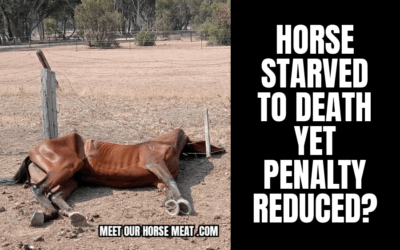
BRIAN CAREY STARVES HORSE TO DEATH
WHO IS THE RACING INDUSTRY KIDDING?We've asked that question before and we are asking it again. "Who is the racing industry kidding?"."Licensed stablehand and horse owner Brian Carey was initially disqualified for 16 months after Racing NSW found he had failed to...

Join us on social media and become a keyboard warrior.